


News
- Blog Post
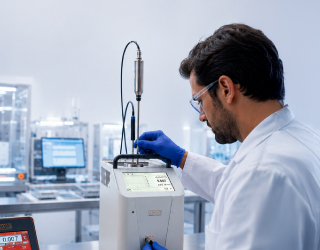
Are You Responsible for the Calibration of Temperature Sensors in a GxP Environment?
If calibration sits on your scope of responsibility, you already know it rarely stays a simple, routine task. In a GxP environment, calibration quickly becomes a question of data integrity, audit readiness, and ultimately, product quality. At first glance, verifying a temperature sensor may seem procedural. In practice, it carries far more weight. Every recorded value feeds into validation decisions, batch release, and compliance evidence. When that data is questioned, the impact extends far beyond a single instrument.
- News Post
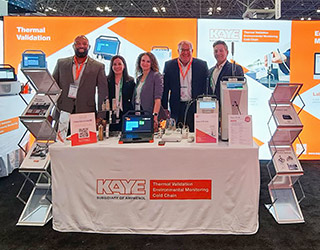
INTERPHEX 2026 — Kaye’s Innovations in Validation, Monitoring, and Pharma 5.0
INTERPHEX 2026 delivered a dynamic three days of innovation and collaboration at the Javits Center in New York City (April 21–23, 2026). The event featured 600+ exhibitors, 100+ educational sessions, a record volume of equipment on display, and the debut of the Contract & Outsourcing Exchange (COEX), which hosted nearly 300 one‑to‑one partnering meetings. With an expanded show floor and strong increases in both attendee and supplier participation, INTERPHEX provided an exceptional forum for connecting, learning, and advancing pharmaceutical and biotech manufacturing.

- Blog Post
What Is Stability Chamber Validation? Key Components Explained
In pharmaceutical and biotech manufacturing, product stability is not an assumption. It is a documented outcome backed by controlled testing, verified data, and regulatory alignments, recreating defined environmental conditions to evaluate how products behave over time. However, the chamber itself must first be proven reliable. A quality system component whose performance must be proven, documented, and defended.
- Blog Post
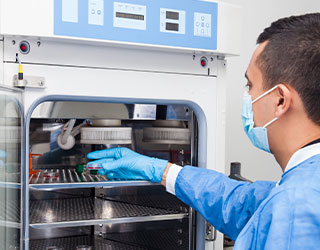
AFNOR FDX15-140: Why correct mapping and validation of test chambers are now a quality and compliance requirement
AFNOR FDX15‑140 is a reference guideline for characterization, verification and ongoing surveillance of thermostatic and climatic enclosures (temperature ± humidity) such as chambers, ovens, incubators and cold/heat rooms at atmospheric pressure. The current version was published in August 2024 and is now in force; the previous version was published in May 2013 and has been withdrawn. The 2024 revision is not merely editorial — it brings measurable technical, metrological and operational changes and aligns the guidance more closely with ISO/IEC 17025 and IEC guidance.
- News Post
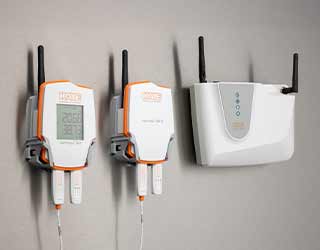
Kaye Launches ValProbe® RM: Next-Generation Wireless Monitoring for Pharma 5.0 Environments
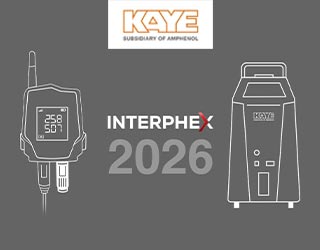
Kaye announces the launch of the ValProbe® RM (Real-Time Monitoring) system, a new addition to its portfolio of validation and environmental monitoring solutions. Designed for pharmaceutical and biotechnology environments, the system introduces advanced wireless monitoring capabilities aligned with the evolving demands of Pharma 5.0 and data-driven compliance.
- News Post
Kaye at INTERPHEX 2026: Driving the Future of Validation and Monitoring
Kaye is set to participate in INTERPHEX 2026, taking place in New York City from April 21 to 23. Recognized as a leading global pharmaceutical and biotechnology event, INTERPHEX brings together innovation, expert-led education, and solution providers across the entire product lifecycle, from development through distribution.
- Blog Post
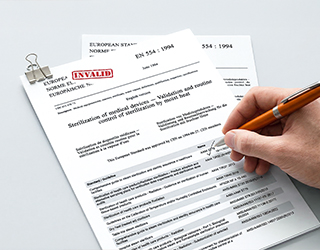
Who Still Remembers EN 554? Looking Back at the Transition to ISO 17665
Hard to believe, but in 2026 it has already been about two decades since EN 554:1994 was formally superseded. For many professionals working in sterilization validation today, the standard belongs to another era. Yet during conversations with validation engineers, quality specialists, and autoclave users, traces of EN 554 still appear in everyday practice.
- Blog Post
The Heartbeat of Data Loggers: A Practical Guide to Why Battery Choice Matters in Validation Systems
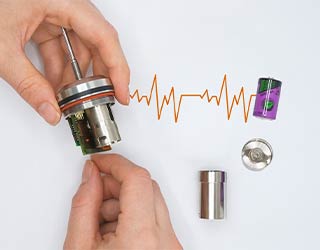
Data loggers are widely used measurement systems for validating thermal processes in pharmaceutical and biotechnology environments. Whether operating in standalone mode or transmitting real time data, these devices depend on one small but essential component: the battery. Small and unassuming, it functions as the heartbeat of the entire system. Without it there is no power, which means no data collection, no storage, and no transmission.
- Blog Post
Thermocouple Selection Guide for Reliable Pharmaceutical Validation – How to Choose the Right Sensor?
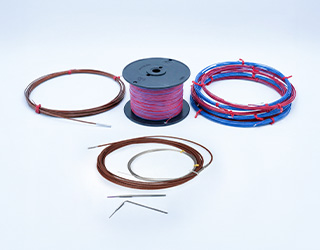
In regulated environments, temperature data is not simply a metric. It is evidence. For pharmaceutical, biotech, and medical device manufacturers, thermocouples sit at the centre of validation integrity, directly influencing data accuracy, audit confidence, and regulatory outcomes.
- Blog Post
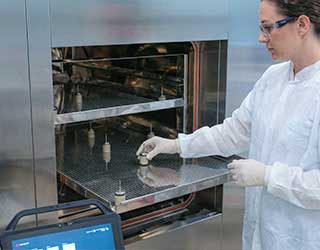
Guidelines for Selecting Sensor Quantity and Optimal Placement in Area Temperature Mapping
Temperature mapping is a fundamental requirement in pharmaceutical manufacturing, biotech laboratories, and regulated storage environments. Whether validating a cold room, stability chamber, warehouse, or transport system, the accuracy of your mapping study depends heavily on two variables: how many temperature dataloggers you use and where and how you place them. A poorly designed study may appear compliant on paper while silently allowing temperature excursions that compromise product quality, regulatory standing, and patient safety.