


- Blog Post
Who Still Remembers EN 554? Looking Back at the Transition to ISO 17665
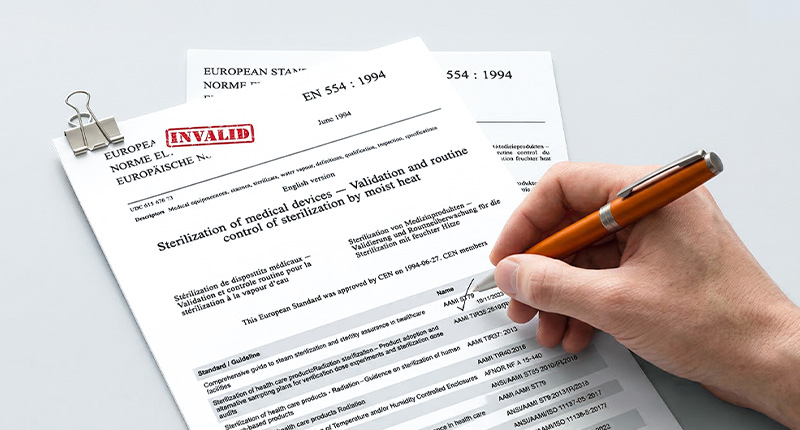
Hard to believe, but in 2026 it has already been about two decades since EN 554:1994 was formally superseded. For many professionals working in sterilization validation today, the standard belongs to another era. Yet during conversations with validation engineers, quality specialists, and autoclave users, traces of EN 554 still appear in everyday practice.
That observation is the reason for this short reflection. This is a practical look back at EN 554 and its transition to ISO 17665. The goal is simple: to understand how the earlier guideline shaped current validation practices and why some of its ideas still remain relevant today.
Understanding this evolution helps provide context for anyone responsible for steam sterilization validation, autoclave qualification, or regulatory compliance in pharmaceutical and medical device environments.
What Was EN 554:1994?
EN 554 defined requirements for the validation and routine monitoring of steam sterilization processes for medical devices. During the 1990s and early 2000s, it served as one of the key reference standards for validating steam autoclaves in both clinical and industrial environments.
The standard focused specifically on moist heat sterilization and provided relatively concrete guidance on how validation studies should be performed.
Typical elements addressed by EN 554 included:
- Definition of sterilization test cycles
- Load configurations for validation studies
- Suggested number of temperature sensors by chamber size
- Physical monitoring of sterilization cycles
- Use of biological and chemical indicators
- Routine control procedures for autoclaves
Compared with modern risk-based standards, EN 554 was relatively prescriptive. Many validation professionals appreciated this because it translated complex sterilization science into practical steps that could be implemented directly.
For organizations building their sterilization validation programs at that time, EN 554 provided a pragmatic and accessible framework.
Limitations of EN 554 in Retrospect
Looking back today, EN 554 reflected the regulatory expectations of its time. While the standard was extremely useful, it also had several limitations that became more visible as the industry evolved.
One important limitation was its focus on individual validation activities rather than on the entire lifecycle of the sterilization process. Documentation expectations were also lighter than what regulators and quality systems require today.
Other limitations included:
- A stronger reliance on prescriptive instructions rather than risk-based evaluation
- Limited emphasis on lifecycle management of sterilization processes
- Less structured guidance on change control and revalidation
- A primarily European perspective rather than a globally harmonized framework
As the medical device and pharmaceutical industries became increasingly global, the need for internationally accepted sterilization standards grew rapidly.
From EN 554 to ISO 17665: Why the Standard Changed
The introduction of ISO 17665 addressed many of these emerging needs. Developed by international experts, the standard expanded the scope of moist heat sterilization validation and introduced a more comprehensive process approach.
While EN 554 focused largely on validation studies and test configurations, ISO 17665 broadened the perspective. The standard now covers the development, validation, and routine control of sterilization processes across the entire lifecycle of equipment and products.
This transition also supported global harmonization. Instead of relying on regional standards, manufacturers and healthcare institutions could follow a common international framework for steam sterilization validation.
Today, ISO 17665 is widely recognized as the primary reference standard for moist heat sterilization processes in regulated industries.
ISO 17665: Key Concepts
The ISO 17665 framework introduces several concepts that define modern sterilization validation.
1. Scope
ISO 17665 covers the development, validation, and routine control of moist heat sterilization processes for medical devices. The standard applies to both solid and liquid products and can be used in industrial as well as clinical environments, regardless of sterilizer chamber size.
2. Lifecycle Approach
One of the most significant changes introduced by ISO 17665 is the lifecycle perspective.
Instead of treating validation as a one time activity, the sterilization process must be developed, validated, documented, and maintained throughout the operational life of the equipment.
Typical lifecycle stages include:
- Process development
- Installation qualification (IQ)
- Operational qualification (OQ)
- Performance qualification (PQ)
- Routine monitoring
- Requalification following changes
This lifecycle model ensures that sterilization processes remain reliable even as equipment ages or process conditions change.
3. Detailed Process Variables
ISO 17665 requires a comprehensive description of all variables that influence sterilization performance.
Examples include:
- Temperature
- Pressure
- Exposure time
- Steam quality
- Load configuration
- Presence of non-condensable gases
For each parameter, acceptable limits must be defined and scientifically justified. Where process variations occur, manufacturers must establish verified operating ranges and tolerances.
4. Limits and Justification
Process limits must be defined and justified by the manufacturer. These limits determine the acceptable operating window for sterilization parameters and help demonstrate that the sterilization process consistently achieves the required microbial lethality.
This requirement reinforces the scientific and evidence-based approach that underpins modern sterilization validation.
5. Validation and Routine Control
The standard requires documented validation studies combined with continuous monitoring during routine operation.
Typical validation tools include:
- Physical measurements using calibrated sensors
- Biological indicators
- Chemical indicators
- Process challenge devices
These elements together provide evidence that sterilization cycles consistently achieve the required microbial lethality.
6. Integrated Guidance
ISO 17665 combines normative requirements with explanatory guidance that helps organizations interpret and implement the standard in practice. This guidance supports validation professionals in translating regulatory expectations into practical validation strategies.
7. Relevance for Users
The standard is not a simple plug and play instruction manual. Users must interpret manufacturer documentation, perform risk assessments, and develop site specific procedures based on their equipment, loads, and operational conditions.
This often includes defining standard operating procedures and establishing triggers for periodic revalidation.
8. Conformity and Regulatory Alignment
ISO 17665 is often referenced together with harmonized standards such as EN 556, EN 285, and ISO 11138 or ISO 11140. These relationships help organizations demonstrate regulatory compliance and align sterilization validation activities with international expectations.
EN 554 vs ISO 17665: Practical Differences
Although both standards address steam sterilization validation, their underlying philosophy differs in several ways.
EN 554 provided relatively concrete instructions for how validation studies should be performed. It described number of measurement sensors based on chamber size, recommended test cycles, and typical load configurations in a practical and prescriptive manner.
ISO 17665 adopts a broader lifecycle approach. While it still defines requirements for validation and routine control, it places greater responsibility on manufacturers and users to justify sterilization processes using documented scientific evidence, defined process parameters, and risk-based evaluation.
This shift reflects the wider evolution of pharmaceutical and medical device quality systems toward lifecycle management, risk management principles, and deeper process understanding.
Practical Implications for Validation Professionals
For manufacturers, ISO 17665 increases expectations around process documentation and scientific justification.
Detailed descriptions of sterilization parameters, load definitions, and operating limits must be available so that users can perform validation activities in their own facilities.
For end users such as pharmaceutical manufacturers, medical device producers, and healthcare institutions, this means additional work in translating manufacturer data into local procedures.
Typical tasks include:
- Reviewing manufacturer sterilization documentation
- Performing facility specific risk assessments
- Developing internal SOPs
- Defining monitoring strategies
- Establishing revalidation triggers
While this approach requires more effort compared with earlier prescriptive standards, it ultimately improves process transparency and long-term reliability.
Supporting Standards for ISO 17665
ISO 17665 is supported by several related standards that address specific aspects of sterilization validation.
Examples include:
- EN 285 for large steam sterilizers
- EN 556-1 for sterility requirements
- ISO 11138 for biological indicators
- ISO 11140 for chemical indicators
- EU GMP Annex 1 for sterile manufacturing
Together, these standards create a broader framework that supports the safe and effective validation of steam sterilization processes.
Why EN 554 Still Appears in Practice
Even though EN 554 is no longer a valid standard, its influence can still be seen in some validation procedures and operating practices.
Many experienced validation professionals originally learned sterilization validation using EN 554 guidance. As a result, some practical testing approaches developed during that period continue to appear in modern validation strategies.
For newcomers entering the field, understanding the historical role of EN 554 can provide valuable perspective when interpreting the more flexible and risk-based framework of ISO 17665.
Conclusion
The transition from EN 554 to ISO 17665 represents an important step in the evolution of steam sterilization validation standards.
EN 554 provided practical and accessible guidance during the early development of sterilization validation programs. ISO 17665 builds on that foundation by introducing lifecycle management, risk-based validation, and globally harmonized requirements.
For validation engineers and quality professionals, understanding both perspectives can be valuable. While EN 554 belongs to an earlier generation of standards, its pragmatic principles still offer useful insights when applying the more comprehensive framework defined by ISO 17665. Understanding both standards also helps professionals interpret modern steam sterilization and autoclave validation requirements more effectively.
Frequently Asked Questions
- Is EN 554 still valid?
No. EN 554 was superseded by ISO 17665 and later adopted as EN ISO 17665. Organizations performing steam sterilization validation should follow the currently applicable ISO and EN standards.
- What is the main difference between EN 554 and ISO 17665?
EN 554 was more prescriptive and focused on specific validation procedures. ISO 17665 introduces a lifecycle and risk-based approach that requires manufacturers and users to justify sterilization parameters using documented evidence.
- Is ISO 17665 a plug and play standard?
No. ISO 17665 provides the framework and requirements, but implementation requires interpretation, risk assessment, and site-specific procedures based on equipment and product characteristics.
Copyright: Amphenol Corporation