


- Blog Post
IQ, OQ, PQ: What Each Phase Means in Pharmaceutical and Biotech Equipment Validation
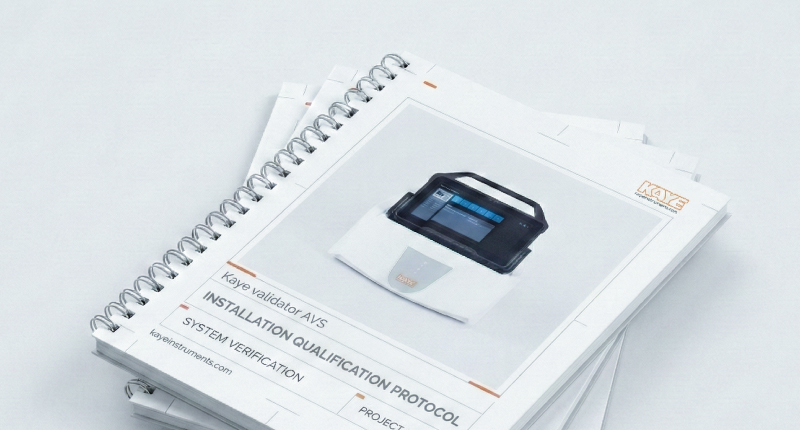
Pharmaceutical and biotech manufacturers depend on precise, reliable, and fully qualified equipment to protect product integrity, patient safety, and regulatory compliance. IQ, OQ, and PQ offer a structured path to proving that systems operate exactly as intended. IQ, OQ, and PQ represent three core phases of equipment qualification designed to verify installation accuracy, operational consistency, and performance reliability. Each stage builds upon the last, forming a structured framework that supports process qualification and long-term compliance. Together, they create a documented assurance trail that demonstrates equipment is fit for use throughout its lifecycle.
While the principles of qualification are universal, the specific protocols, documentation sets, and execution steps vary for each product line due to differing technologies, risk profiles, and regulatory expectations. Whether teams are validating thermal validation equipment, temperature loggers, or advanced wireless validation systems, each system requires a tailored approach supported by product-specific protocols.
As regulatory expectations tighten and AI-driven quality systems accelerate decision making, understanding each qualification stage has become a business imperative. This article breaks down every phase with clarity and practical depth while aligning with real-world challenges seen across validation teams.
If your team is planning a validation project or preparing for an upgrade, this is the ideal time to engage Kaye for guidance, product-specific documentation, or complete IQ/OQ service.
Understanding Installation Qualification (IQ)
Installation Qualification verifies that equipment is installed in line with manufacturer requirements, internal procedures, and regulatory expectations. Regardless of whether the system is a thermal validation platform, a temperature logger network, or a wireless monitoring solution, IQ confirms that physical components, supporting accessories, and software elements are positioned, connected, and configured appropriately.
For example, when teams qualify equipment such as the Kaye Validator AVS, IQ involves confirming that each hardware and software component is properly installed and ready for use. This may include validating sensor input modules, firmware versions, the validation console, secure data handling functions, and supporting accessories. Ensuring these foundational elements are correct helps create a compliant installation framework that supports reliable progression into operational and performance testing.
Key Documentation Requirements for IQ
A complete IQ package typically includes:
- Equipment identification records, including model numbers, serial codes, and firmware or software versions
- Installation checklists covering utility requirements, environmental considerations, safety elements, and mounting or setup activities
- Verification that system software is installed correctly, including user-role configuration and security settings
- Records confirming proper detection of thermocouple, voltage, current, or RTD inputs
- Calibration certificates for reference instruments and verification of encoded calibration data storage
- Documentation confirming functionality of USB, SD card, Ethernet, and Wi Fi communication pathways
- Unpacking and inspection records verifying equipment condition upon receipt
In addition, the Kaye qualification methodology also requires four procedural documentation checks:
- Vendor Documentation Verification: Confirms that all manufacturer-supplied manuals, certificates, and accessory documentation have been received, catalogued, and stored in accordance with cGMP documentation controls.
- Customer Documentation Verification: Ensures internal SOPs governing installation, calibration, security, and system operation are current, approved, and traceable through document numbers and effective dates.
- Software and Firmware Information: Records all software and firmware versions relevant to the AVS system, including the validation console, SIM modules, and associated devices, supporting cGMP software identification requirements.
- Hardware Information Capture: Documents model numbers, serial numbers, internal IDs, calibration records, cabling availability, and confirmation that all primary and supporting components are installed as defined in the Kaye Validator AVS User’s Guide.
Evaluating Operational Qualification (OQ)
Operational Qualification provides documented evidence that equipment performs as intended across its defined operating range. This phase evaluates controls, monitoring functions, alarms, data pathways, and system behaviour under both typical and stressed conditions. Whether the equipment is a thermal validator, environmental monitoring system, or digital data acquisition platform, OQ ensures its operational design is robust, repeatable, and aligned with user requirements.
To meet industry expectations, OQ typically expands into specific verification areas that simulate real-world usage, including security behaviour, communication stability, data transfer performance, input and output response, and system resilience during abnormal scenarios.
Key Documentation Requirements for OQ
A comprehensive OQ program includes structured verification points such as:
- Software Security Verification: Confirms administrator rules, password policies, session settings, user roles, and policy configurations.
- User Account and Access Control Checks: Ensures removal of default accounts, validation of active user profiles, and confirmation of proper authorization levels.
- Communication Pathway Testing: Verifies stable data flow between system software, consoles, connected modules, sensors, and network components.
- System to Instrument Data Transfer Evaluation: Ensures configuration files, test parameters, and calibration records transfer accurately and consistently.
- Input and Output Response Testing: Confirms the correct behavior of sensors, probes, digital triggers, commands, alarms, and audit trail entries.
- Core Operating Function Checks: Verifies setup workflows, calibration sequences, qualification routines, and audit trail logging behavior.
- Power Loss and Data Recovery Verification: Tests data integrity during unexpected shutdowns and confirms the system restores historical data upon reboot.
- Emergency Data Retrieval Testing: Evaluates backup extraction methods such as removable storage ports or offline access utilities.
- File Management Verification: Confirms controlled behavior for exporting, archiving, importing, reviewing, and converting data files.
A well-executed OQ closes the loop between design expectations and real-world operational behaviour. These structured documentation elements form the evidence base required to demonstrate operational consistency and creates a strong foundation for progressing into Performance Qualification, where the system must prove its consistency under actual process conditions.
Assessing Performance Qualification (PQ)
Performance Qualification serves as the stage where equipment and processes must demonstrate consistent, reliable performance under routine operating conditions. While IQ and OQ verify correct installation and functional behaviour, PQ shifts the focus toward end-to-end operation. Here, the system is evaluated as it would be used in real production, confirming that it can repeatedly meet predefined quality, safety, and process criteria. PQ typically incorporates real product loads or representative test cycles, ensuring that equipment, software, sensors, and support utilities function cohesively as a complete process.
A strong PQ relies on a well-designed test plan. This plan outlines operating ranges, sampling strategies, process parameters, acceptance criteria, and contingency actions. Because PQ involves live or simulated production conditions, its effectiveness depends heavily on the quality of the process description, the accuracy of the defined requirements, and the team’s ability to evaluate performance holistically. Many organizations leverage third party specialists during this stage to strengthen objectivity and ensure rigorous documentation.
Process Performance Qualification (PPQ) often accompanies PQ activities in regulated industries. PPQ focuses on documenting process stability over time, using statistical evidence to confirm that variability is controlled and that equipment, methods, and supporting systems continue to meet specifications. Together, PQ and PPQ establish a long-term performance baseline that supports product quality, regulatory compliance, and audit readiness.
Key Documentation Requirements for PQ
A robust PQ package includes comprehensive, process-oriented documentation such as:
- A PQ protocol outlining acceptance criteria, operational boundaries, sampling methods, and test procedures
- Cycle or batch records demonstrating consistent, repeatable outcomes across multiple runs
- Statistical analyses used to evaluate process trends, variability, and capability
- Data captured from monitoring systems or analytical technologies to confirm real time performance stability
- Documentation of deviations, corrective actions, and justifications for any unexpected observations
- A final PQ report summarizing the evidence, verifying that all criteria were met, and confirming the system’s readiness for routine use
Core Barriers to IQ, OQ, and PQ Effectiveness
Life science teams often face recurring obstacles during qualification activities. Compressed timelines, shifting priorities across engineering, quality, and manufacturing, gaps in documentation practices, and increasingly complex system architectures can collectively slow progress and complicate compliance. These challenges tend to surface most visibly during OQ and PQ, were missing requirements, unclear roles, or inconsistent records can undermine otherwise sound validation work.
Improvement opportunities tailored for pharmaceutical manufacturing teams:
- Establish structured cross functional alignment: Set clear ownership between validation, QA, engineering, and manufacturing to ensure consistent interpretation of user requirements.
- Standardize documentation workflows: Implement controlled templates and centralized storage to strengthen traceability and reduce audit risk.
- Strengthen change control discipline: Tie equipment updates, software revisions, and process adjustments directly into requalification triggers.
- Adopt scalable validation tools and services: Utilize platforms and service partners like Kaye to support repeatability, reduce manual effort, and ensure documentation accuracy.
- Integrate risk-based planning: Prioritize critical process parameters and high impact equipment functions early in the protocol design stage.
- Translate process needs into measurable engineering requirements: Align acceptance criteria and test plans with true production conditions rather than generic templates.
- Use statistical and data driven evaluation: Apply variability and capability assessments to confirm long term process stability.
These targeted improvements help create smoother IQ execution, stronger OQ performance, and higher confidence as systems advance into PQ.
A Practical and Cost-Conscious Path to Qualification and Validation Support
Many pharmaceutical and biotech manufacturers rely on partners who can provide validated, audit ready qualification frameworks without straining internal resources. Kaye supports this need with a comprehensive IQ/OQ service model designed to save time, reduce compliance risk, and deliver fully traceable documentation.
Kaye’s Installation Qualification and Operational Qualification Protocols define the complete set of procedures required to ensure equipment is installed and operated according to Kaye recommendations and cGMP expectations. These protocols are delivered in both hard copy and digital formats, enabling teams to tailor documentation to their internal quality systems.
Each Kaye IQ/OQ Protocol Package Includes:
- Installation Qualification Document
- Operational Qualification Document
- Standard Operating Procedures
- Set up programs required for execution
Organizations can choose the approach that best fits their operational needs:
- Kaye executed IQ/OQ onsite: Performed at the customer facility for systems such as the Validator AVS, ValProbe RT, and RF ValProbe II.
- Kaye executed IQ/OQ at a certified Kaye facility: Ideal for minimizing disruption to production environments.
- Customer executed IQ/OQ using Kaye documentation: Fully developed protocol packages that internal teams can execute with minimal effort.
Kaye’s experts bring deep experience in thermal validation, environmental monitoring, and high accuracy measurement equipment. By outsourcing qualification to Kaye, teams can:
- Reduce downtime by leveraging Kaye’s trained specialists
- Accelerate project timelines with predeveloped, audit ready documentation
- Strengthen compliance with procedures aligned to cGMP and global regulatory expectations
- Minimize rework with standardized, consistently applied qualification methods
Kaye Validation Reference
To support long term compliance, Kaye provides a serialized Validation Reference that documents the full validation lifecycle of Kaye hardware, software, and firmware. It includes:
- Quality Control Documents
- Development Procedures
- Quality Assurance Procedures
- Release Documentation
- Quality Assurance Test Records
This reference serves as a complete audit trail, mirroring the depth of information obtained during an onsite supplier audit. Registered users automatically receive updates, ensuring documentation remains current.
Kaye’s combined service and documentation model streamlines the qualification process, strengthens regulatory readiness, and supports operational continuity.
Conclusion
IQ, OQ, and PQ form the backbone of equipment qualification in regulated environments, shaping how organizations demonstrate control, consistency, and regulatory alignment across every stage of equipment use. When executed with clear acceptance criteria, disciplined documentation, and cross functional ownership, these qualification phases help teams maintain data integrity, protect product quality, and support audit readiness. Incorporating Quality by Design principles strengthens this framework further by aligning qualification work with true process needs, operational performance windows, and long-term reliability expectations.
Kaye enhances this foundation by delivering IQ/OQ protocols, services, and regulatory aligned documentation built on decades of thermal validation expertise. Our approach reflects industry best practices, global cGMP expectations, and the stringent requirements of pharmaceutical and biotech environments. Each protocol is developed to support traceability, simplify inspections, and minimize risk by ensuring equipment is installed, configured, and operated exactly as intended.
As part of this commitment, each Kaye system is supported with a dedicated validation binder specific to that product line. While the testing steps, verification points, and documentation elements vary depending on the technology involved, the overarching philosophy remains consistent across all Kaye solutions. Every binder is structured to guide users through a complete, compliant validation lifecycle, maintaining clear version control, ensuring repeatability of qualification steps, and providing a unified framework for inspections and audits.
For organizations seeking a scalable, compliant, and proven qualification pathway, Kaye provides tailored IQ/OQ execution, documentation packages, and ongoing technical guidance. Our team supports your qualification lifecycle from planning through audit.
Contact us to discuss your requirements or request a demonstration.