


- Blog Post
What Is Stability Chamber Validation? Key Components Explained
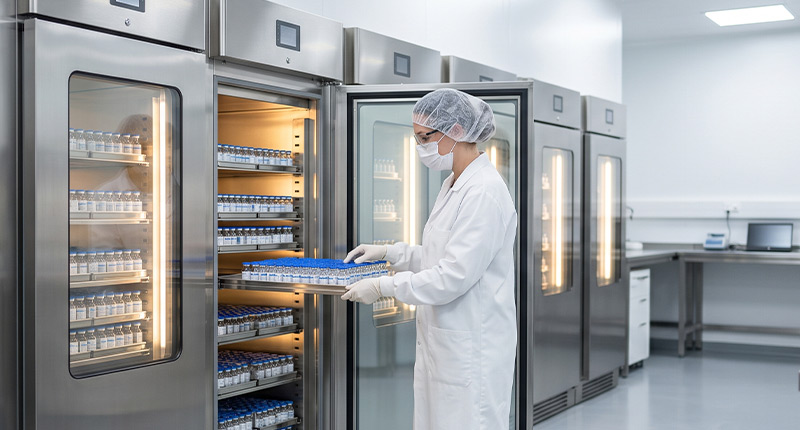
In pharmaceutical and biotech manufacturing, product stability is not an assumption. It is a documented outcome backed by controlled testing, verified data, and regulatory alignments, recreating defined environmental conditions to evaluate how products behave over time. However, the chamber itself must first be proven reliable. A quality system component whose performance must be proven, documented, and defended.
In pharmaceutical manufacturing, product stability demands documented proof through controlled testing and regulatory-aligned data. Stability chambers recreate precise environmental conditions to assess long-term behaviour but first require validation to ensure reliability - a cornerstone of quality systems.
What Is a Stability Chamber?
A stability chamber is a controlled environmental system designed to maintain reliable, repeatable conditions for long-term testing. Its core function extends beyond achieving target temperatures or humidity levels - it sustains precise parameters with proven consistency over extended durations. In regulated industries, this makes the chamber a critical component of quality infrastructure, rather than mere laboratory equipment.
In pharmaceutical and biotechnology manufacturing, stability chambers deliver the qualified environments essential for ICH-guided stability studies. These studies evaluate the response of drug substances, finished products, and packaging to environmental stressors over time. Chambers must exhibit control, uniformity, and stability throughout their usable volume to ensure results accurately reflect product behavior, free from localized variations. Engineered for continuous operation - often months-long—they incorporate alarm management, data logging, and deviation protocols for full traceability and compliance.
Stability chambers come in two primary configurations, each with unique operational and validation demands:
- Reach-in chambers: Compact units ideal for laboratories handling smaller studies, method development, or parallel conditions. They offer scalability while limiting qualification scope.
- Walk-in chambers: Large-scale rooms accommodating palletized loads or oversized articles. Their size and airflow dynamics necessitate rigorous risk assessments, temperature mapping, and ongoing performance verification.
While synonymous with pharmaceutical shelf-life testing, stability chambers serve broader regulated sectors like automotive, aerospace, and electronics. These industries rely on them for objective data under extreme temperature, humidity, and light conditions. Across applications, the principle holds: conditions must be controlled, measurable, and substantiated by validated evidence.
Stability Chamber Working Principle and Environmental Control Mechanism
A stability chamber operates as a closed-loop environmental control system designed to maintain predefined temperature and humidity conditions with high consistency over extended durations. Rather than functioning as isolated heating or cooling equipment, the chamber integrates air conditioning, circulation, sensing, and control logic to ensure uniform exposure across the usable space, even under changing loads or external influences.
Key elements of the working principle include:
- Conditioning of incoming air through heating, cooling, humidification, and dehumidification systems
- Uniform air distribution to minimize temperature and humidity gradients
- Continuous measurement using strategically placed sensors
- Real-time feedback to the control system for automatic correction of deviations
- Programmable control, alarms, and secure data logging to support compliance and traceability
Applications and Use Cases of Stability Chambers
Stability chambers are used to generate controlled, reproducible data that supports regulatory compliance, product quality assurance, and risk-based decision-making. In pharmaceutical and biotech manufacturing, they form the backbone of formal stability programs required to establish shelf life, storage conditions, and packaging suitability across the product lifecycle.
Core regulated applications include:
- Long-term, intermediate, and accelerated stability studies conducted in line with ICH requirements
- Packaging validation for bottles, blisters, vials, and sealed container systems to assess moisture ingress and material interaction
- Stress testing under elevated temperature and humidity to identify degradation pathways and failure thresholds
- Simulation of global market conditions based on ICH climatic zones to support worldwide distribution strategies
Beyond pharmaceuticals, stability chambers are widely used in medical device, food, electronics, and automotive industries. In these sectors, chambers provide objective evidence that products can withstand defined environmental stresses during storage, transport, and use. Rather than relying on theoretical performance claims, manufacturers use stability chamber data to demonstrate environmental robustness through validated, auditable testing.
Oxidation and Photolysis Testing
Stability studies often extend beyond temperature and humidity. Oxidation and photolysis testing assess how exposure to oxygen and light affects product integrity.
- Oxidation studies assess how oxygen exposure influences active ingredients and excipients.
- Photolysis studies evaluate sensitivity to UV and visible light, particularly for light-reactive compounds.
These studies help establish degradation profiles, validate analytical methods, and support label claims.
What Are the Key Factors in Stability Chamber Performance?
The performance of a stability chamber depends on multiple interacting parameters. Validation protocols must address each factor individually and collectively.
Temperature Control
Temperature stability is the primary validation focus. Chambers typically operate between -20°C and +70°C, with pharmaceutical applications concentrated around ICH-defined conditions. Rapid recovery after door openings and minimal spatial variation are critical acceptance criteria.
Humidity Control
Humidity control, often ranging from 20% RH to 95% RH, directly impacts product degradation mechanisms. Validation verifies both accuracy and recovery performance during dynamic conditions.
Light Control
For photostability testing, controlled light sources simulate exposure levels defined by regulatory guidance. Validation ensures consistent intensity and exposure duration.
Airflow and Uniformity
Even airflow prevents stratification and localized hot or cold zones. Poor airflow design often reveals itself during temperature mapping studies.
Monitoring and Data Logging
Continuous monitoring using calibrated temperature loggers and humidity sensors forms the backbone of defensible validation data. Modern wireless data loggers reduce manual intervention and improve data integrity.
Interior Space and Load Configuration
Validation must reflect how the chamber is actually used. Empty and loaded conditions behave differently, which is why mapping is performed during both operational and performance qualification.
What Is a Stability Chamber Validation?
A stability chamber validation protocol is a structured document that defines how the chamber’s performance will be verified against predefined acceptance criteria. It is both a technical roadmap and a compliance artifact.
From a regulatory perspective, stability chamber validation is a critical control point. The quality of stability data, shelf-life assignments, and market approvals all depend on the assumption that the chamber environment is accurate and uniform. Validation removes that assumption by replacing it with measurable, traceable proof aligned with GMP and ICH expectations.
Key Components of Stability Chamber Validation protocol include:
- Validation scope and objectives define what the chamber will be qualified for, including operating ranges, load conditions, and intended use. Clear scope prevents under- or over-validation.
- Risk assessment and critical parameters identify variables such as temperature, humidity, airflow, and recovery time that have a direct impact on product stability.
- Instrument selection and calibration ensure that measurement devices, including temperature loggers and sensors, are accurate, traceable, and suitable for the required tolerances.
- Sensor placement strategy determines how effectively the chamber volume is represented during mapping studies, particularly in high-risk areas such as corners and door zones.
- Acceptance criteria and deviation handling define what constitutes compliance and how excursions are investigated, documented, and resolved.
- Documentation and approvals provide traceability, audit readiness, and formal authorization to place the chamber into routine use.
Together, these components confirm that the stability chamber is fit for its intended purpose, not merely operational.
Qualification Stages
Most validation protocols align with the IQ, OQ, and PQ framework.
- Installation Qualification (IQ) verifies correct installation against manufacturer specifications.
- Operational Qualification (OQ) confirms that the chamber operates as intended across its operating range, typically under empty conditions.
- Performance Qualification (PQ) demonstrates consistent performance under loaded, real-world conditions.
Together, these stages establish confidence before routine use begins.
ICH Guidelines for Stability Chambers
The International Council for Harmonisation defines global expectations for stability testing under ICH Q1A(R2). These guidelines specify temperature and humidity conditions based on climatic zones.
Common long-term conditions include:
- Zone I and II: 25°C ± 2°C / 60% RH ± 5% RH
- Zone III: 30°C ± 2°C / 35% RH ± 5% RH
- Zone IVa: 30°C ± 2°C / 65% RH ± 5% RH
- Zone IVb: 30°C ± 2°C / 75% RH ± 5% RH
Accelerated and intermediate conditions are also defined. Validation protocols must demonstrate that chambers maintain these conditions within permitted tolerances.
Temperature Mapping for Stability Chambers
Temperature mapping is a critical component of stability chamber validation and thermal validation. It verifies temperature and humidity distribution throughout the usable chamber volume.
Mapping objectives typically include:
- Identifying hot and cold spots that may affect product exposure
- Confirming temperature and humidity uniformity over time
- Verifying recovery performance after disturbances such as door openings
- Supporting the placement of permanent monitoring sensors for routine use
Temperature mapping is performed during Operational Qualification, Performance Qualification, and periodic requalification to ensure long-term chamber reliability.
Steps for Effective Chamber Mapping
Effective temperature mapping follows a structured, risk-based approach designed to generate defensible, repeatable, and regulator-ready results.
- Protocol Development A detailed mapping protocol is developed before execution. This document defines study objectives, operating setpoints, mapping duration, sensor quantity, sensor locations, acceptance criteria, and deviation handling procedures. Clear protocol definition reduces ambiguity, aligns expectations across stakeholders, and supports regulatory review.
- Instrument Preparation All temperature loggers and humidity sensors are calibrated prior to use using traceable temperature sensor calibrators. Calibration establishes measurement accuracy and traceability, ensuring that recorded data can withstand audit scrutiny. In many validation programs, pre- and post-mapping calibration checks are included to detect sensor drift.
- Sensor Placement Sensors are placed strategically throughout the chamber to represent the full usable volume. Typical locations include corners, geometric centre points, multiple shelf levels, and high-risk areas such as near doors, air inlets, and return vents. Sensors are positioned away from walls and direct airflow to reflect true product exposure rather than localized boundary conditions.
- Data Collection Wireless thermal validation systems or temperature loggers record data at predefined intervals over a validated study period, often a minimum of 24 hours. Larger or walk-in stability chambers may require extended mapping durations to capture full operating cycles, load effects, and recovery behaviour.
- Data Analysis and Documentation Collected data is analysed to assess uniformity, stability, and compliance with predefined acceptance criteria. Any excursions or trends outside limits are investigated through documented root cause analysis. Final reports provide traceable evidence of chamber performance and form part of the permanent validation record.
Maintenance, Calibration, and Requalification
Validation does not end after initial qualification. Long-term confidence in stability data depends on a structured program of routine maintenance, scheduled calibration, and periodic requalification. These activities ensure that chamber performance remains aligned with validated conditions throughout its operational lifecycle.
- Routine calibration of chamber sensors ensures ongoing measurement accuracy and traceability. Temperature and humidity sensors are subject to drift over time, and regular calibration against traceable standards helps prevent silent measurement errors that may not trigger alarms.
- Periodic requalification is used to confirm that the chamber continues to perform within approved limits following factors such as component aging, repairs, relocation, changes in load configuration, or setpoint adjustments. Requalification activities often include repeat mapping and functional verification.
- Annual or risk-based temperature mapping provides additional assurance of uniformity and stability, particularly for chambers supporting critical stability studies. Risk-based approaches may justify more frequent assessments depending on usage intensity and product criticality.
Neglecting maintenance, calibration, or requalification increases the risk of undetected deviations, which can undermine the credibility of stability data and expose manufacturers to regulatory findings.
Kaye Offering for Stability Chamber Validation
Kaye provides purpose-built validation equipment designed specifically for regulated pharmaceutical and biotech environments, where accuracy, data integrity, and audit readiness are non-negotiable. Kaye solutions are widely used for stability chamber validation, thermal validation, and temperature mapping activities across global GMP facilities.
Key solutions include:
- Kaye Validator AVS® is a proven wired validation system used for stability chamber qualification, calibration, and temperature mapping during IQ, OQ, and PQ.
- Kaye ValProbe® RT and its range of wireless data loggers enable real-time temperature and humidity monitoring, supporting both validation studies and routine stability testing with strong data integrity.
- Kaye RM ValProbe® Loggers provide high-accuracy wireless thermal validation for chamber mapping, offering flexibility, traceability, and efficient deployment in both reach-in and walk-in chambers.
- Kaye LabWatch® IoT extends visibility beyond qualification by enabling centralized monitoring, alerts, and data access for validated environments.
- Accessories and probes complete the ecosystem, supporting reliable sensor placement, calibration workflows, and adaptable validation setups.
Together, these validation equipment solutions reduce manual handling, minimize transcription risk, improve data integrity, and accelerate validation timelines, while maintaining the level of control and traceability expected in regulated stability testing environments.
Summary
- Stability chamber validation confirms true environmental reliability across the usable chamber volume, not merely that the chamber can reach a setpoint.
- Well-defined validation protocols align chamber performance with ICH expectations, GMP requirements, and regulatory audit standards.
- Temperature mapping is a core element of thermal validation, enabling early identification of uniformity risks that could impact stability data.
- Wireless validation equipment improves efficiency, reduces manual intervention, and strengthens data integrity throughout qualification and routine monitoring.
- Ongoing calibration and periodic requalification are essential to maintaining long-term compliance as chambers age, loads change, and operating conditions evolve.
Conclusion
A stability chamber validation protocol is a foundational element of compliant pharmaceutical and biotech manufacturing. It transforms environmental control from an assumption into documented evidence. By combining structured protocols, accurate validation equipment, and disciplined execution, manufacturers protect product quality and regulatory confidence.
If you are planning a new stability chamber qualification or reassessing an existing program, Kaye Instruments can support your validation strategy with proven thermal validation solutions. Contact our team to request a consultation or live demonstration.
FAQ
1. Why is stability chamber validation critical for regulatory compliance?
Stability chamber validation is essential to prove that temperature and humidity conditions used in stability studies are controlled, uniform, and reproducible. Regulatory agencies expect documented evidence that environmental conditions do not compromise stability data. Without validation, shelf-life claims and storage conditions lack scientific and regulatory credibility.
2. How often should a stability chamber undergo temperature mapping or revalidation?
Temperature mapping is required during initial qualification and should be repeated after chamber relocation, major maintenance, control system changes, or when performance drift is suspected. Many organizations also perform periodic revalidation annually or every two to three years based on risk assessment, usage patterns, and regulatory expectations.
3. What equipment is used for stability chamber validation and thermal mapping?
Stability chamber validation uses calibrated validation equipment such as temperature loggers, humidity sensors, wireless data loggers, and temperature sensor calibrators. Wireless thermal validation systems are increasingly preferred because they reduce setup complexity, improve spatial coverage, and support compliant, traceable data collection aligned with GMP and ICH guidelines.
4. What Kaye products are used for stability chamber validation?
Kaye Instruments provides a comprehensive portfolio of validation solutions purpose-built for stability chamber validation and thermal validation in regulated pharmaceutical and biotech environments. This includes the Kaye Validator AVS for wired thermal validation, the Kaye ValProbe RT wireless thermal validation system with its range of temperature, humidity, and pressure data loggers, Kaye RF ValProbe II loggers for accurate temperature and humidity mapping, and Kaye LabWatch IoT for centralized monitoring, data integrity, and compliant data management. These systems are complemented by a full range of Kaye accessories, supporting precise probe placement, repeatable mapping studies, and audit-ready documentation aligned with GMP and ICH requirements.